Understand and debug your AI model
There is remarkable mathematical structure and geometry within neural networks. We help you uncover the hidden representations inside your model to remove the guesswork from AI training - going from alchemy to precision engineering.






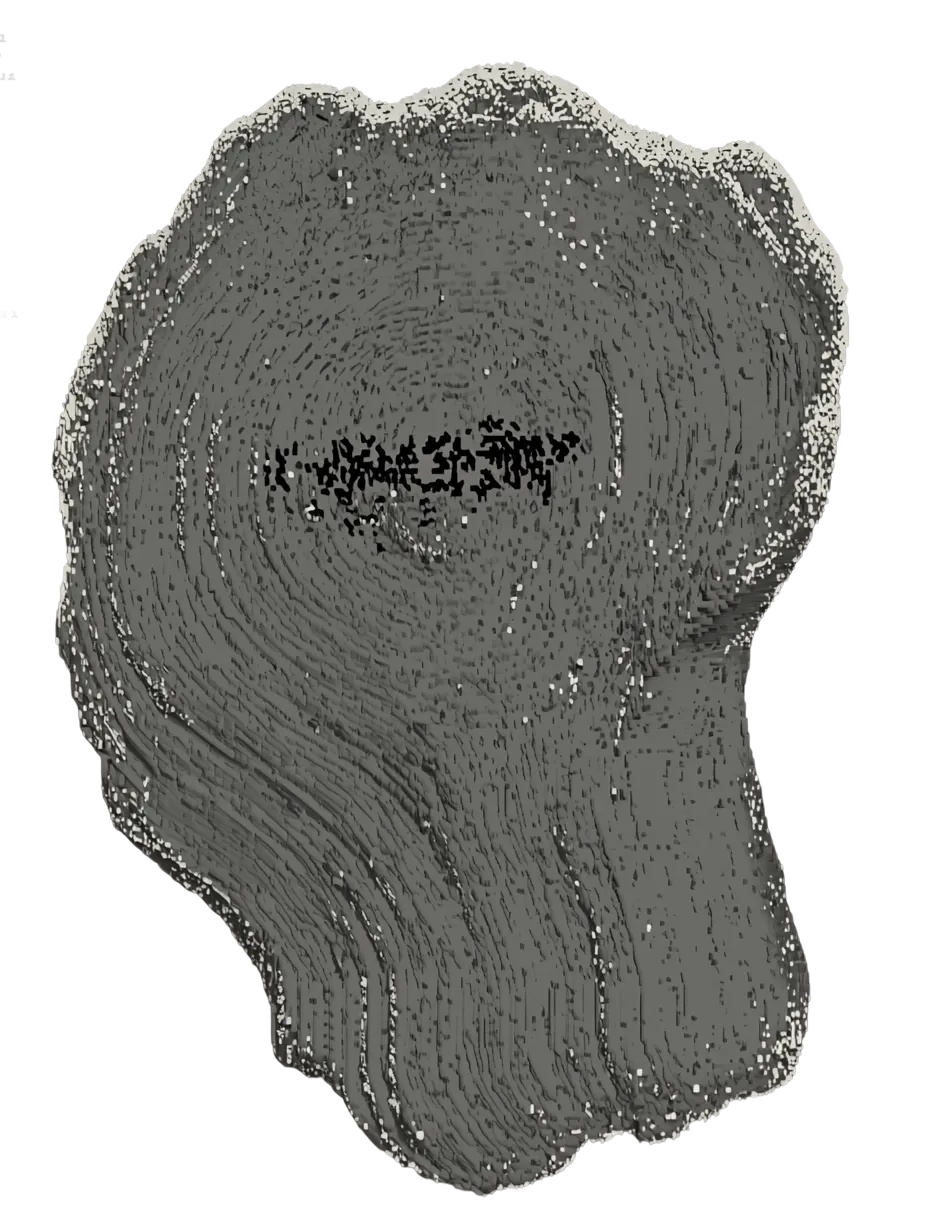
Understand the scientific foundations of neural networks so that we can intentionally design AI
We believe that AI is the most consequential technology of our time, yet today we train models with remarkably little understanding of the nature of their intelligence.
We’re an interpretability research lab dedicated to creating the science and technology to change that.
Interpretability for all types of AI models
 LLMs
 Life Sciences
Novel methods to understand,
debug, and design your AI model

Understand
Reverse engineer the causal mechanisms of AI to reveal its internal structure, uncovering novel science and validating when predictions reflect true understanding.
Revealing the neural geometry inside models
Neural networks have rich structure in their activations, underpinning their internal algorithms. We’ve developed new methods to map and edit this geometry, unlocking deeper interpretability and better control of model behavior.

Discovering a novel class of Alzheimer's biomarkers
We identified a novel class of biomarkers for Alzheimer's detection by interpreting an epigenetic model, the first major finding in the natural sciences obtained from reverse-engineering a foundation model.

Understanding neurons: good news for interpretability
Our essay on why AI models might be far more interpretable than we thought. We revisit the evidence and explain why neurons aren’t as tangled as they seem, and why there might be a bitter lesson for interpretability.

Debug
Precisely debug issues with model behavior, identify and remove confounders, and diagnose failures before they occur in production.

Catching reward hacking from inside the model
We found a clear internal signal in models that accompanies reward hacking, and built probes that detect it — enabling efficient, real-time detection of reward hacking at scale.

Deploying production cyber monitors on Kimi K3
We built cybersecurity monitors for Kimi K3 and GLM 5.3 that outperform an LLM judge at 50x lower cost, even when run live on every token.

Surfacing unexpected behaviors caused by a training run
Training often causes unexpected and undesired behaviors which show up only rarely, meaning evals often miss them. We can identify such behaviors by amplifying the diff between two checkpoints in logit space - a method now used for pre-deployment testing of frontier models.

Design
Control training precisely to ensure your model learns what you want with less data and fewer off-target effects.
Teaching models to be right for the right reasons
Models are rewarded for succeeding in training, without guidance on how they should get there — leading to misgeneralization and misalignment. We developed mechanistic shaping, a way to target training more precisely using models’ internal representations.

Reveal and shape what your model learns, before you train
Predictive data debugging lets us predict which behaviors RL on a preference dataset will amplify or suppress, trace that back to the responsible data, and reshape the data and/or training to prevent undesired effects.

Intentionally designing the future of AI
Our essay on intentional design describes our vision for using interpretability to guide model training – moving from guess-and-check to closed loop control.