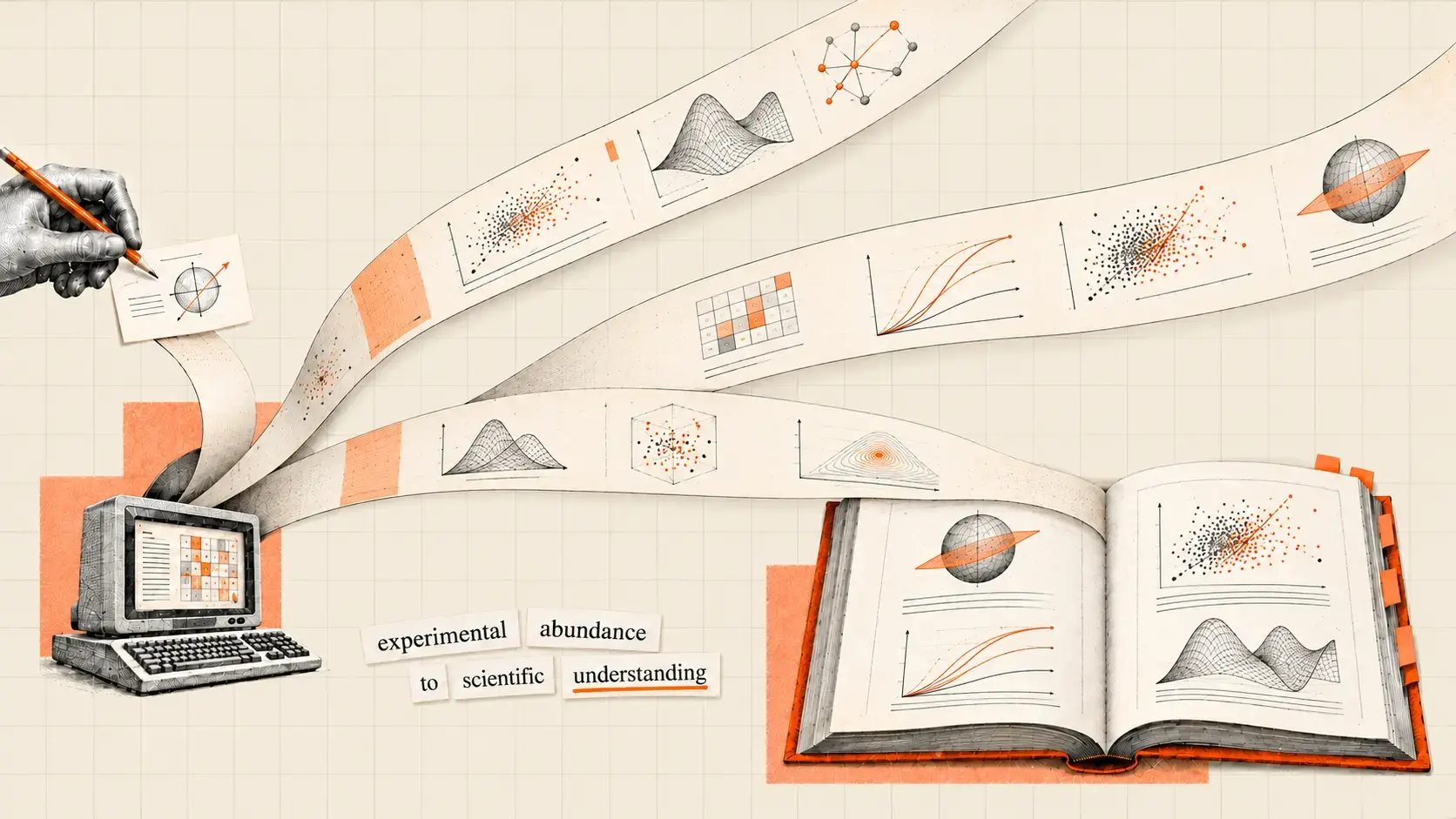
For most of its history, interpretability has been losing a race. I don’t think it has to stay that way. If we will soon have a “country of geniuses in a datacenter,” what should they do? I believe the first step we should take is to ensure we can understand and align AI itself.
To do that, we need a Human Genome Project for AI: an ambitious, cross-industry effort to reverse-engineer a large language model.
At Goodfire, we are committing $10M to begin this project. Our first goal is to unlock scaling laws for interpretability, where our understanding of a model grows predictably with compute, by placing capable agents in an environment where they can run and verify experiments at scale. Our ultimate goal is to fully reverse-engineer a frontier scale model.1
This project will require far more than our own efforts. It will demand scientific collaboration across organizations, and scaling to the most capable models may require billions in shared costs. The result will be a living encyclopedia, open to researchers everywhere, that advances our collective ability to understand and align AI.2
In this essay, I want to explain why I believe this project is now possible, and set out a new vision for the field of interpretability.
Increasing our Cognitive Time
A major constraint on progress in our field has been the amount of research time dedicated to it. Compare the field of interpretability – which has a few hundred active researchers at the frontier – to the field of neuroscience, where major conferences alone attract tens of thousands of researchers.3 Both fields have similar aims, but differ in size by about two orders of magnitude. Roughly speaking, for every year of ‘cognitive time’ interpretability gets to spend, neuroscience can spend a century!
With this in mind, it’s surprising how far interpretability has come (Olah et al. 2020; Sharkey et al. 2025). Nevertheless, in spite of recent advances (Ameisen et al. 2025; Bushnaq et al. 2026), as a field we’re still lagging behind where we need to be.
How do we close the gap? I propose we treat interpretability like any other natural science, and focus on what is perhaps the most fundamental limit on progress in any science: experimental throughput.
A field in which researchers run every experiment by hand, however simple, can only move as fast as they can. Lifting this constraint through automation has historically been harder than in other parts of machine learning, because interpretability work particularly hinges on a flexible intelligence that can weave between hypothesis, experiment, and interpretation, even within a well-specified framework. We have, in short, been constrained by cognitive rather than computational resources.
With the advent of intelligent agents, this is beginning to change (Rott Shaham et al. 2024).
When appropriately harnessed, agents can carry out interpretability experiments quickly and accurately, dramatically increasing the cognitive time brought to bear on the field, at least at the level of execution (Bissell et al. 2025).4 Unlike almost every other natural science, interpretability has essentially no physical constraints: we have no need to grow cells, build telescopes, or fabricate new materials. This means that, wherever we can teach agents to perform the relevant experiments, experimental throughput can scale with compute. This property is shared by the two domains in which agents have been most successful, mathematics and coding, and by almost no other field of natural science. If any science should be revolutionised by AI, it should be interpretability.
Accelerating Experiments at Agentic Scale
Realising this potential requires us to build the infrastructure that turns computational capacity into useful scientific work.
If agents can provide the pulling power of a freight train, then our task is to lay the tracks such that each investigation leaves behind findings sturdy enough to support ever-more ambitious explanations. We already have enough scientific judgement to lay the tracks, and increasingly capable agents will let us accelerate to a pace we could never sustain ourselves.
Given the importance and urgency of progress in interpretability, we should do so as quickly as possible. Fortunately, even though the majority of the calendar time available to us may have been spent (assuming short AI timelines), the vast majority of the cognitive time is still ahead. The choices we make now will determine how productively that time is spent.
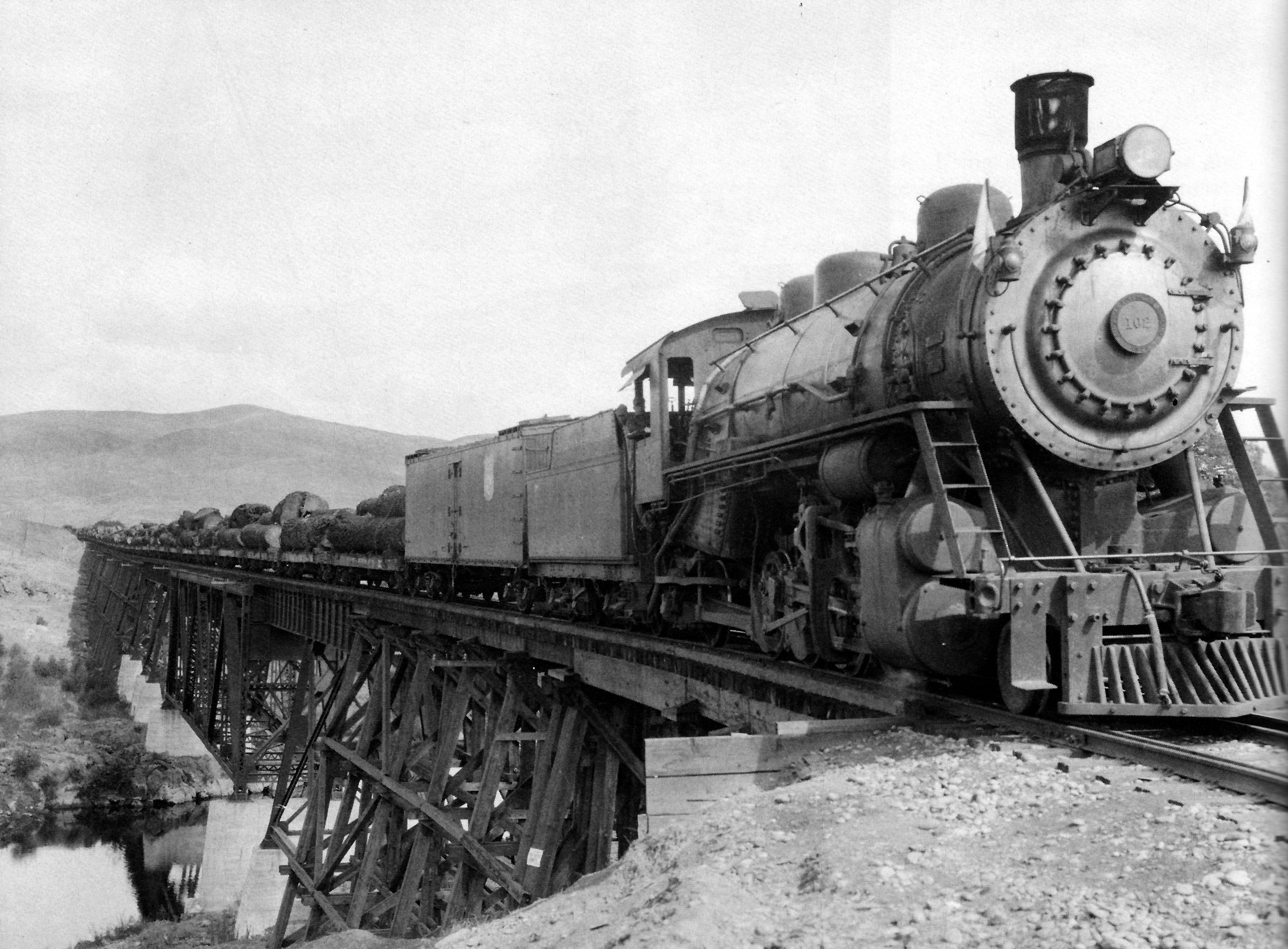
We won't get a revolution in interpretability just by pointing an agent at a neural network and saying "understand this network, make no mistakes" – at least not with the agents we'll have in the critical time period. We will need to harness the strengths of agents as they stand, such as their speed, their ability to follow complex instructions, and their ability to optimise well-defined metrics. Simultaneously, we will need to mitigate their weaknesses, such as their tendencies towards misrepresentation (Bissell et al. 2025) and a surprising difficulty integrating conflicting experimental data. This harness will need to consist of:
-
A rigorous experimental workflow that makes verifying experimental claims straightforward and more-or-less automatable. A very potent question here is “what is the equivalent of Lean for mechanistic interpretability?” My initial intuitions are that the framework of causal abstraction (Geiger et al. 2025) is a strong starting point, but we will need to integrate this with the real components of the network itself. To be clear, we need a language for hypothesis testing, not a single ‘interpretability task’ or ‘interpretability number’. From the perspective of interpretability-as-a-science, these latter ideas seem incoherent – what, after all, is ‘the biology number’, and how would it go up?
-
An information architecture for humans and agents that makes experimental results additive to one another rather than separate, mutually contradictory pieces of slop. Without it, our freight train just hauls an ever-growing load of disconnected findings. If we have a swarm of tens or hundreds of thousands of scientist agents working on interpretability, how do we make their results either build on one another or expose important anomalies for future study? Moreover, how do human interpretability researchers specify the most important questions and receive information from the research swarm that helps them to answer those questions? In short, how do we run a field when years of research happen in a week?
-
Increasingly capable scientific agents: I believe current models have enough general intelligence to be useful, and I am optimistic that adapting them to embrace a scientific mindset can produce effective automated interpretability agents. Using the experimental workflow described above will make agentic interpretability experiments measurable, easy to reason about, and understandable in terms of scientific progress.
These are all open problems, but seem solvable to a sufficient extent in a short period of time. Once we have this system, though, what should we do with it?
From Experimental Abundance to Scientific Understanding
To make the most of this ‘interpretability machine,’ we will need to reorient our approach to interpretability towards asking the highest-leverage scientific questions and finding experiments that help us to answer them.
At the highest level, these are questions like “how do neural networks represent things?”, “how do neural networks create those representations via computation?”, and “how do neural networks learn?”
Of course, questions this broad cannot be tested directly. Progress requires breaking them down into queries that are specific enough for experiments to address, like “how do neural networks represent compositional structure?” and “how do neural networks handle large quantities of memorisation?” Setting out a full agenda of such questions is beyond the scope of this essay, though I would like to break down one illustrative example of what it can look like to engage with these questions.
The story of the linear representation hypothesis (LRH) teaches us a lot about the value of an organising hypothesis and of the difficulties in building upon one. The initial ‘strong LRH’ (Smith 2024), which roughly speaking posited that neural networks represented concepts as directions in activation space, was a bold conjecture about the structure of neural networks (Elhage et al. 2022). As a field, we have too often treated it as something to defend or tear down. The strong LRH is clearly false (Engels et al. 2025; Wurgaft et al. 2026), but linear directions often are meaningful – there is clearly something here to explain. A better theory should account for both the successes and the failures of the original hypothesis.
This was the motivation behind our work on neural manifolds (Geiger et al. 2026 ; Bhalla et al. 2026). We asked whether concepts might be represented by richer, multidimensional structures, and what that would imply for the tools we use to recover them. Block-sparse featurizers (BSFs) are, from one angle, the ‘featurizer form’ of this multidimensional model of representations, the analogue of SAEs. Applied to vision models, they recover structure that is fragmented across the individual directions found by conventional featurizers. This gives us evidence for the usefulness of the hypothesis, as well as new phenomena to investigate (Fel et al. 2026).
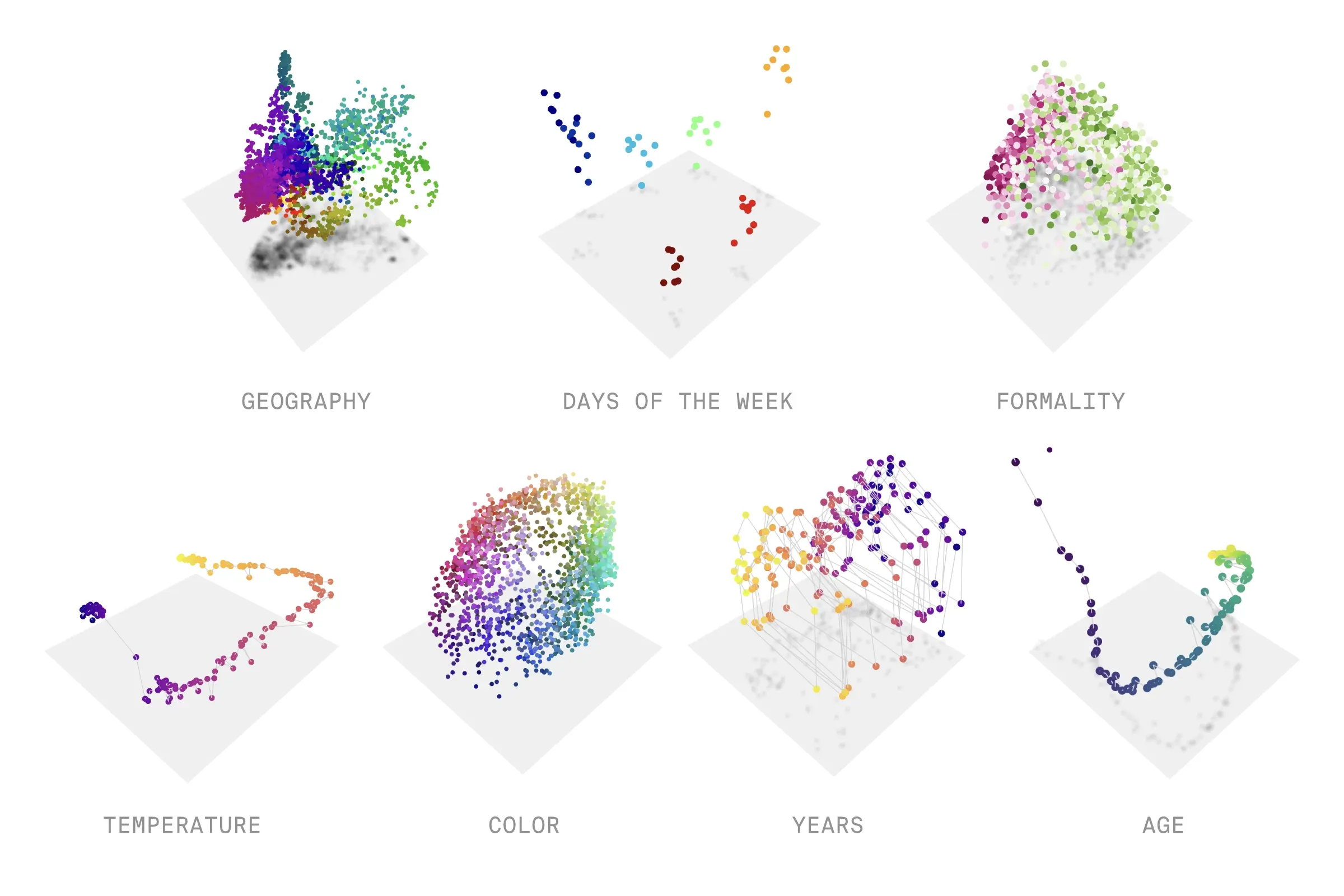
So where does that leave featurisers’ role in the science of interpretability? I believe each family of featurizers (e.g., SAEs) operationalizes a hypothesis about how networks form representations, i.e., their inductive biases (Hindupur et al. 2025). These inductive biases, along with their associated featurizers, should be revised as our understanding improves. In turn, this ever-evolving picture of a model’s inner workings should contain new gaps that our existing explanations cannot account for.
This flywheel of explanation, experiment, and revision is the scientific process we must accelerate. Each turn should leave us with a better account of the model and a sharper sense of what that account still fails to explain.
As experimental execution becomes increasingly automated, more human cognitive time should go towards the muddy, intuition-critical work of connecting findings to motivate new abstractions and eventually unifying theories. The aim is to build a sufficiently reliable body of knowledge that we can make increasingly ambitious conjectures and subject them to meaningful tests.
So what might this body of knowledge look like? A living “encyclopedia” of a model would give humans and agents a shared interface for this work, connecting experimentally supported claims to the broader explanations we are building from them. Its value would lie in helping us turn many local discoveries into a coherent understanding of the model. Building such an encyclopedia raises many open questions, two of which stand out. The first is whether, and how, the encyclopedia should be maintained as the model undergoes further training. Some causal claims may remain valid, while others need to be revised. We could regularly rerun the experiments supporting them, selectively revisit claims affected by an update, or identify properties of circuits that persist even as the weights implementing them change. At the heart of this choice is the ever-present question of what training preserves and what it changes. The second is how far the encyclopedia generalises beyond a single model. Some findings will reflect the particulars of one model's data, architecture, and training. Others will hold across models, as the universality hypothesis (Olah et al. 2020; Huh et al. 2024) suggests. If interpretability is to become a science of AI rather than of individual models, learning to draw that line will matter a great deal.
What Comes Next
For the first time, we can bring something close to the full force of AI to bear on our own field. Imagine millions of agents running verifiable experiments and contributing to a shared knowledge base designed for human and AI researchers alike. This would transform the prospects for the field. While on short timelines our calendar time may still be limited, the vast majority of the field’s cognitive time would be still ahead of us.
How much we can accomplish with that time will hinge on the coherence, cohesiveness, and courage of our scientific endeavour. We need to continuously challenge ourselves as a field to make bold conjectures and, on the other end, meet the well-founded rejection of those ideas with curiosity and celebration. At the accelerated agentic pace that I envision, this cumulative process could bring a depth of understanding that has so far been difficult even to imagine.
The prospect of such a depth is extraordinary (Ho 2026). A unifying theory of interpretability, from individual computations to patterns across AI systems, would give us a firm foundation for confidence in the systems we build. It could give rise to something like scaling laws for interpretability, helping us anticipate how a model’s mechanisms and behavior will develop as training proceeds. We could use that foresight to guide and shape training, intervening as lightly or heavily as necessary. Once a model is deployed, that same understanding could help us anticipate how it will behave in novel situations, and proactively intervene. In this sense, accelerating interpretability is synonymous with expanding our own agency alongside the intelligence of the systems we build. The more deeply we understand them, the more deliberately we can choose the future we make with them.
References
- Circuit Tracing: Revealing Computational Graphs in Language Models [link]
Emmanuel Ameisen et al., 2025. Transformer Circuits Thread. - Do Sparse Autoencoders Capture Concept Manifolds? [link]
Usha Bhalla et al., 2026. arXiv. - You and Your Research Agent: Lessons from Using Agents for Interpretability Research [link]
Mark Bissell et al., 2025. Goodfire. - Interpreting Language Model Parameters [link]
Lucius Bushnaq et al., 2026. Goodfire. - Toy Models of Superposition [link]
Nelson Elhage et al., 2022. Transformer Circuits Thread. - Not All Language Model Features Are One-Dimensionally Linear [link]
Joshua Engels et al., 2025. ICLR 2025. - Structuring Sparsity: Block-Sparse Featurizers Capture Visual Concept Manifolds [link]
Thomas Fel et al., 2026. arXiv. - Causal Abstraction: A Theoretical Foundation for Mechanistic Interpretability [link]
Atticus Geiger et al., 2025. Journal of Machine Learning Research 26(83), 1–64. - The World Inside Neural Networks [link]
Atticus Geiger et al., 2026. Goodfire. - Projecting Assumptions: The Duality between Sparse Autoencoders and Concept Geometry [link]
Sai Sumedh R. Hindupur et al., 2025. arXiv. - We Can and Must Solve Alignment [link]
Eric Ho, 2026. Goodfire. - Position: The Platonic Representation Hypothesis [link]
Minyoung Huh et al., 2024. ICML 2024, PMLR 235, 20617–42. - Zoom In: An Introduction to Circuits [link]
Chris Olah et al., 2020. Distill. - A Multimodal Automated Interpretability Agent [link]
Tamar Rott Shaham et al., 2024. ICML 2024, PMLR 235, 44293–44321. - Open Problems in Mechanistic Interpretability [link]
Lee Sharkey et al., 2025. arXiv. - The ‘Strong’ Feature Hypothesis Could Be Wrong [link]
Lewis Smith, 2024. LessWrong. - Manifold Steering Reveals the Shared Geometry of Neural Network Representation and Behavior [link]
Daniel Wurgaft et al., 2026. arXiv.
Footnotes
-
It is hard to define when reverse engineering is complete. Our goal is to understand a frontier scale model well enough to provide mechanistic explanations in response to arbitrary questions posed by scientists and engineers about how the model works. ↩
-
How will this compare to previous efforts, such as Neuronpedia? Our encyclopedia will be organized around research questions and answers backed by a structured database of well-typed causal claims and the experimental code, rather than being organized around model parts. Researchers will be able to both explore existing answers and post new questions for agents to investigate. ↩
-
The Society for Neuroscience reported over 20,000 attendees in 2024. ↩
-
By cognitive time I mean the volume of intelligence available to us, measured in researcher hours, rather than the quality of intelligence that produces the startling insights capable of transforming a science. The two are, of course, distinct. For tasks where progress depends more so on the sheer amount of work we can bring to bear, I find it very helpful to think of ‘the amount of cognitive time available for task X’. ↩